Free quotes · Overland Park, KS
(913) 357-7617
Overland Park, KS · Foundation repair

Sump pump installation in Overland Park

Most calls about a sump pump are replacements rather than first installs. The pit and the drain tile around the footing tend to outlast several pumps, because the pump is the moving part and the rest of the system is not.

We are a lead referral service, not a contractor. Free, no-obligation quotes.
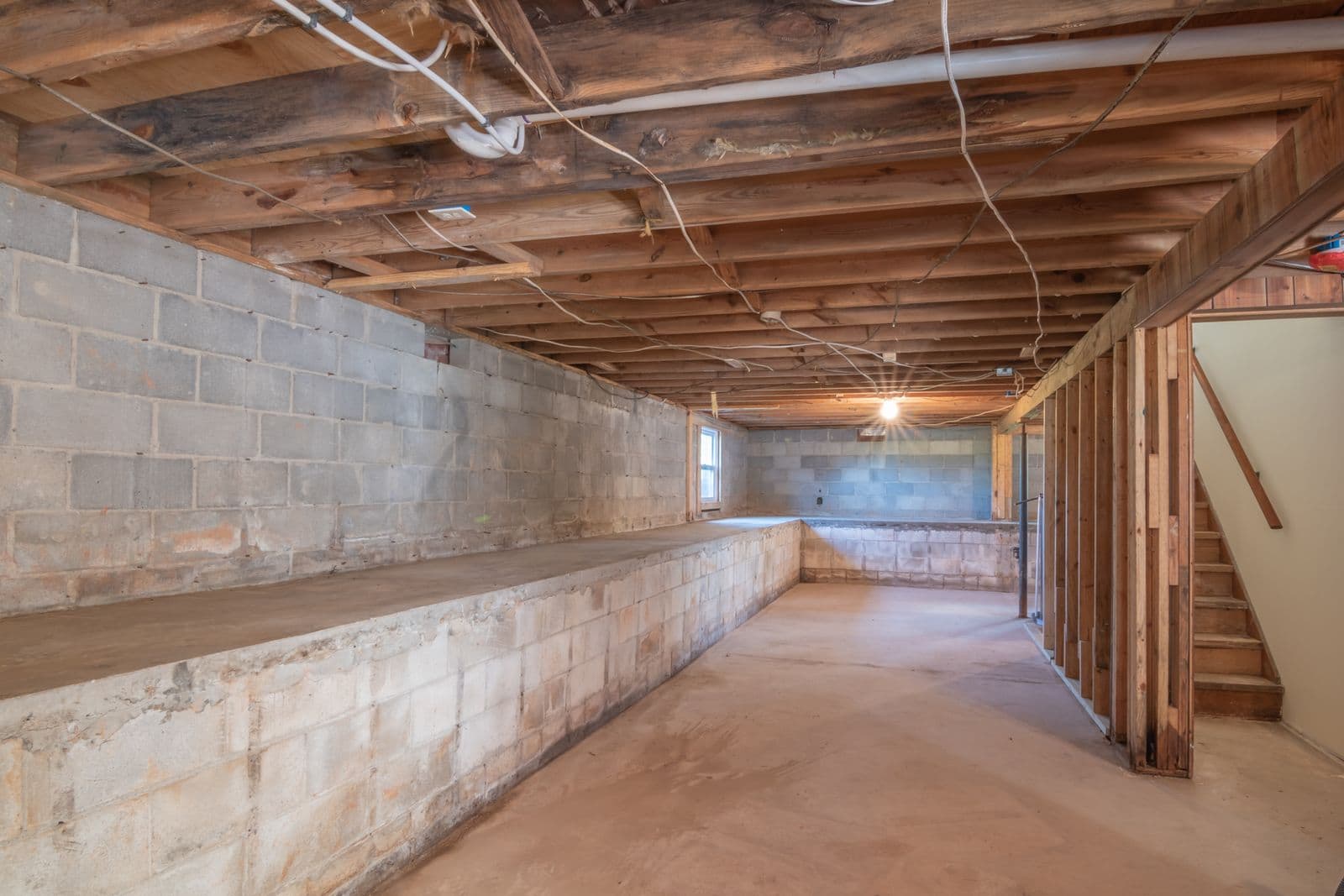
Empty basement with concrete walls, exposed beams and stairs

What the pump is actually doing

Water that reaches the soil beside a basement wall is collected by drain tile laid at the footing and carried to a pit at the low point of the floor. The pump sits in that pit and lifts the water out of the house. Nothing about that arrangement stops water arriving; it decides where the water goes once it does.

That is why a pump on its own is not the answer to a wet basement. If water is coming through a crack, over the top of a wall or up through the floor, the pump is treating the symptom at the bottom of the room. Which of those is happening is what a basement waterproofing inspection is for.

How they fail

  • The float switch jams, against the pit wall or on debris, and the pump either never starts or never stops.
  • The check valve above the pump gives out, so each time it shuts off the water in the discharge pipe runs back into the pit and it starts again. A pump that cycles every minute in dry weather is usually this.
  • The discharge line blocks or freezes outside, and the pump runs against a closed pipe.
  • The pump is too small for the water arriving, so it runs continuously through a wet spell and wears out early.
  • Age on its own. A pump that has run through every wet week for years is a consumable part, not a fixture, and the time to replace one is before it fails rather than after.

The power question

A sump pump needs electricity, and the weather that fills a basement is the weather that brings the power down. A pump with no backup is at its least useful in exactly the conditions it was bought for.

The two usual answers are a battery backup pump, which is a second pump on its own float and battery, and a water-powered backup, which runs off mains water pressure and needs no power at all but uses water while it runs. Both are worth asking about by runtime: how long it holds up at the rate water actually arrives, not in a catalogue.

Where the water is put

A discharge that stops a few feet from the wall puts the water back into the ground the drain tile is draining, and the pump lifts the same water again. How far the line runs, and where it ends in relation to the slope of the ground, is part of the job rather than an afterthought.

Whether a sump may discharge into the sanitary sewer is a question for the city, and the answer differs between jurisdictions. Worth settling before the work rather than after it.

Clay ground and how hard a pump works

Johnson County soils carry a very high clay content. K-State’s extension office for the county sets out what that does to a foundation: clay swells as it takes up water and shrinks as it dries, with enough force to crack walls. The same saturated ground is what the drain tile and the pump exist to deal with.

A pump here can therefore still be working well after the rain has stopped, which is an argument for sizing it on how much water arrives rather than on the size of the house, and for not treating the backup as optional.

What to get in the quote

  • The pump’s capacity, and what that figure was based on.
  • Whether a backup is included, which kind, and how long it runs.
  • Whether the check valve and the discharge line are being replaced or reused.
  • Where the discharge ends up, and how far that is from the wall.
  • What is guaranteed and for how long, in writing.
  • The price is set by the contractor who looks at the basement. This site publishes none, because the work is not ours to price.

Keep reading

More in Overland Park

Related services

Cracked, weathered concrete wall

Foundation wall repair

Crack sealing, wall anchors and carbon fiber for bowing walls.

Gray concrete block wall

Basement waterproofing

Interior drain tile, sump systems and exterior membranes.

Unfinished basement with exposed beams and pipes

Crawl space encapsulation

Vapor barriers, drainage and structural piers under sagging floors.

Before you call

Common questions

When is a foundation crack serious?
A hairline vertical crack is usually shrinkage and not urgent. A horizontal crack, a stair-step crack in a block wall, or any crack wider than a quarter inch means the wall is moving and it should be inspected before it grows.
Do I need a permit for foundation repair?
Yes for anything structural: wall anchors, carbon fiber, piering, and interior drain tile all require a permit under the Wisconsin Uniform Dwelling Code and most other state codes. The contractor pulls the permit as part of their scope, so you sign nothing. Crack injection alone is usually treated as a repair and not permitted.
Will homeowner's insurance cover foundation repair?
Almost never for gradual settlement or normal soil movement, which are the two most common causes. Insurance typically covers sudden events like a burst pipe or a vehicle strike. Read the policy for the specific exclusion wording before assuming coverage.
How long does the work take?
Most repairs are one to three days on site. Interior drain tile and encapsulation take a day per section. Piering runs one to three days depending on how many piers and whether the ground is frozen. Curing time on epoxy or grout adds a day or two before backfill.
Step one

Get a written quote

Describe what you are seeing and a licensed foundation repair contractor working in Overland Park will contact you to inspect it. A repair can only be priced once the cause is known, so the quote follows the inspection.

  • Free, with no obligation
  • The findings and the price in writing before any work
  • One repair contractor calls you

Or call (913) 357-7617

Call (913) 357-7617 Quote